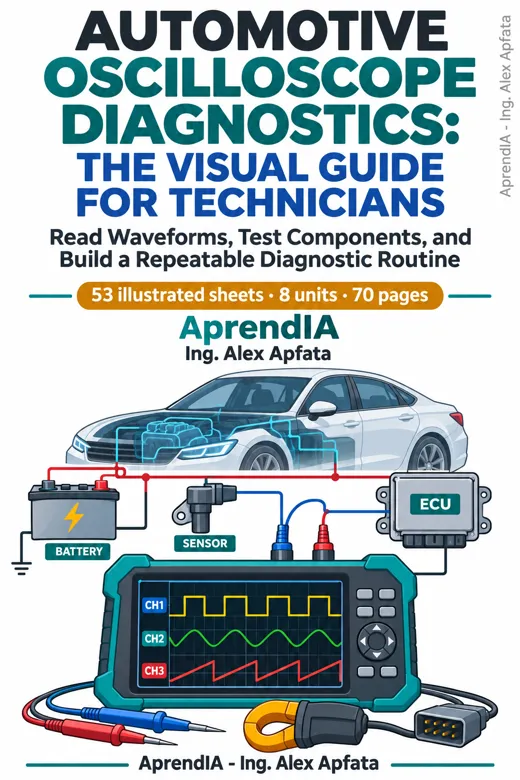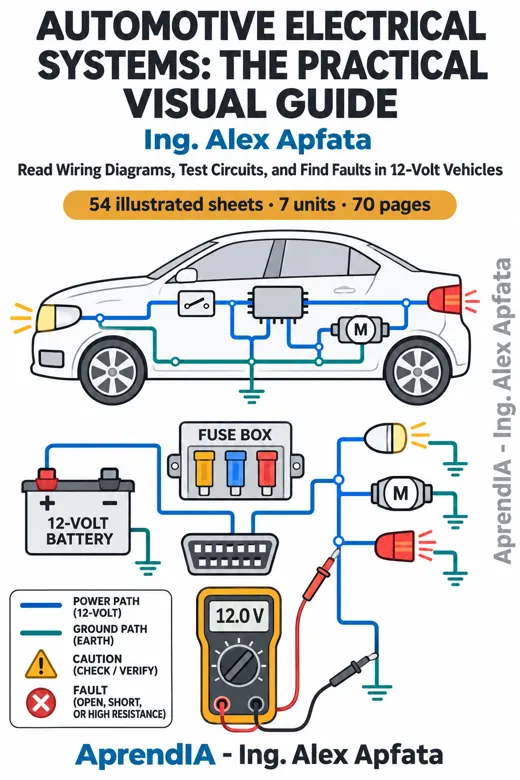
✳Wood-Frame Construction Basics: The Visual Guide for New Builders in the U.S.✳EPA 608 Certification: The Visual Study Guide for HVAC/R Technicians✳Home Repair Basics: The Visual Guide for New Homeowners✳Practical Electronics from Scratch: The Visual Guide✳Automotive Oscilloscope Diagnostics: The Visual Guide for Technicians✳Automotive Electrical Systems: The Practical Visual Guide✳PLC Programming from Zero: The Visual Guide to Ladder Logic✳Industrial Pneumatics and Hydraulics: The Visual Guide✳High-Protein Meal Prep: The Visual Recipe Guide✳Hands-On Learning Activity Book for Kids Ages 4-8
Need help? ↗

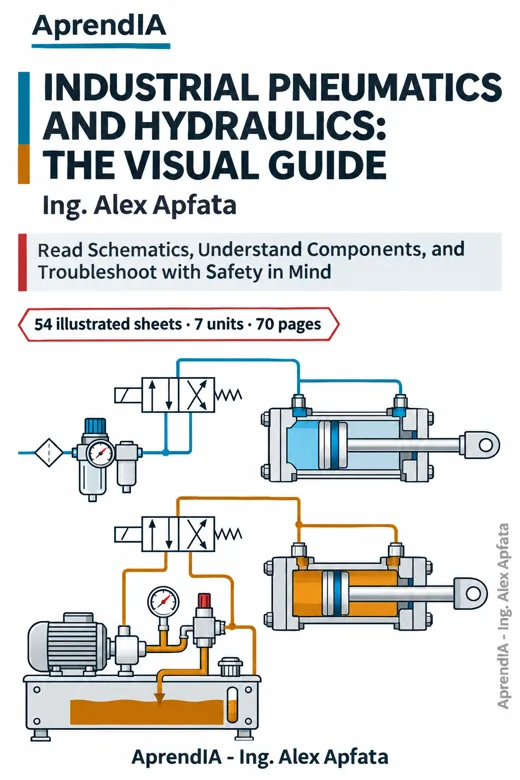
4 real pages from the book · tap one to enlarge

BUSINESS & ENTREPRENEURSHIP · EDITION UNITED STATES · English · 70 PAGES

Industrial Pneumatics and Hydraulics: The Visual Guide

Read Schematics, Understand Components, and Troubleshoot with Safety in Mind

$27.00USD · PDF

Over 5,000 guides delivered every month

INSIDE THIS GUIDE

What you will learn.

See the pages ↑
  1. 01

    Trace pneumatic and hydraulic schematics using component symbols, valve positions, and complete flow paths.

  2. 02

    Compare air preparation equipment, actuators, pumps, and control valves through labeled diagrams and practical selection checks.

  3. 03

    Use troubleshooting checklists for leaks, slow actuators, overheating, and unexpected movement, with clear energy isolation boundaries.

TABLE OF CONTENTS

Everything inside, unit by unit.

7 units · 54 topics

  1. Unit 1: Understand Fluid Power

    1. Compare Compressed Air and Hydraulic Oil
    2. Understand Pressure and Pressure Drop
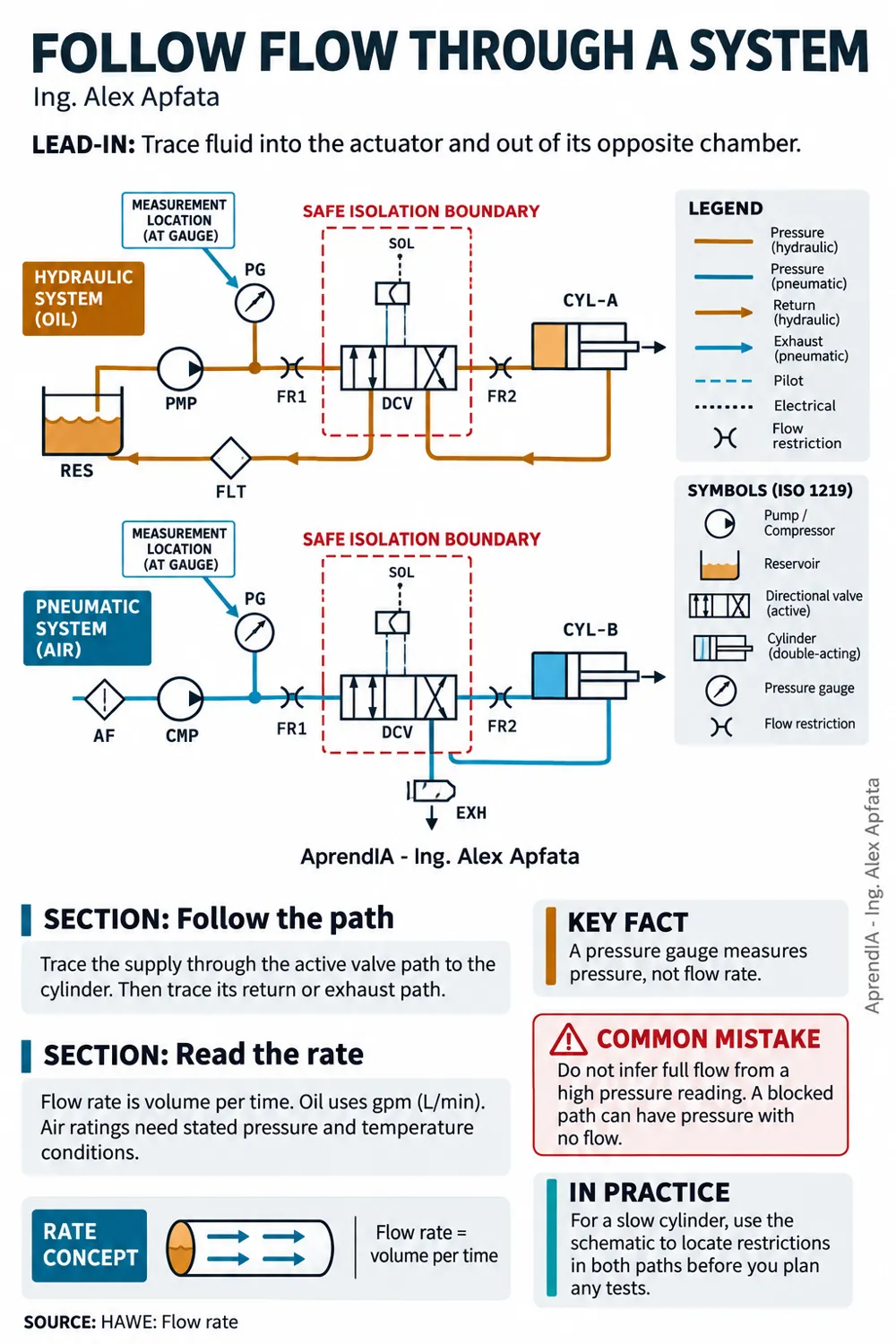
    3. Follow Flow Through a System
    4. Connect Pressure, Piston Area, and Force
    5. Connect Flow, Cylinder Area, and Speed
    6. See How Energy Becomes Motion and Heat
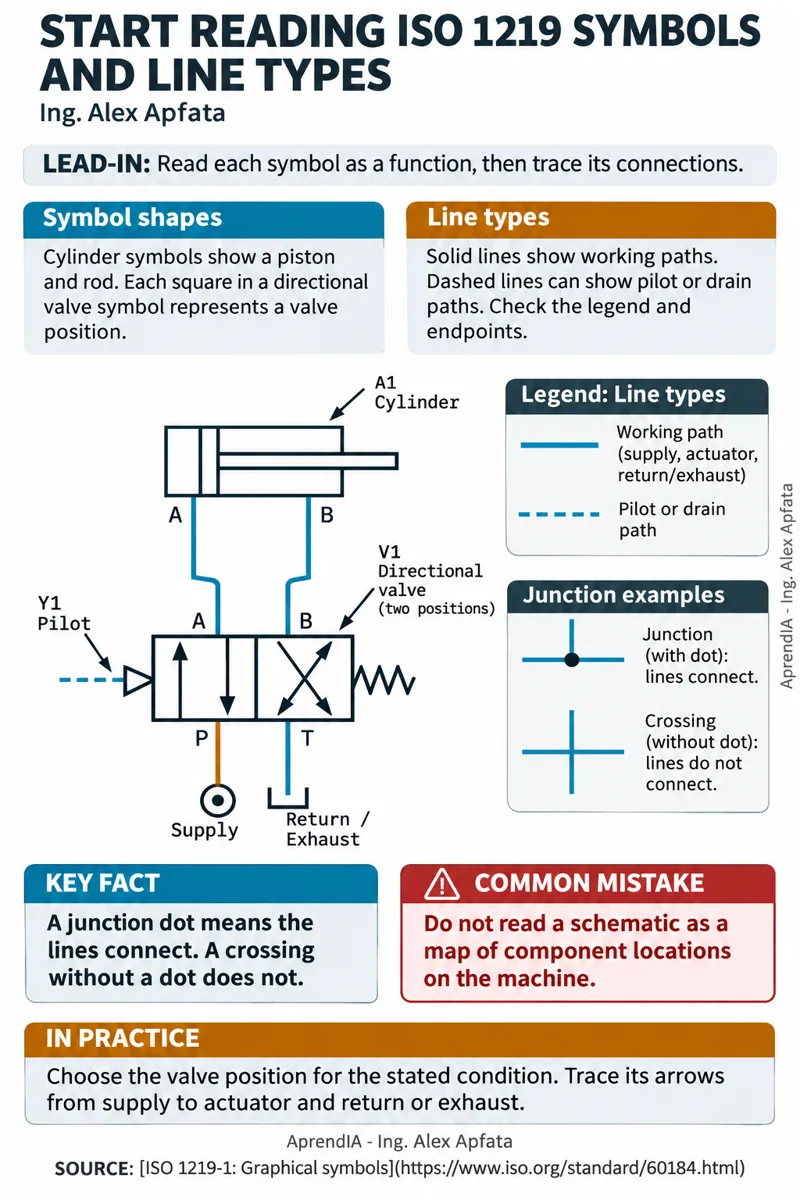
    7. Start Reading ISO 1219 Symbols and Line Types
  2. Unit 2: Control Hazardous Energy

    1. Find Stored Pressure and Other Energy Sources
    2. Understand OSHA Lockout/Tagout and Your Site Procedure
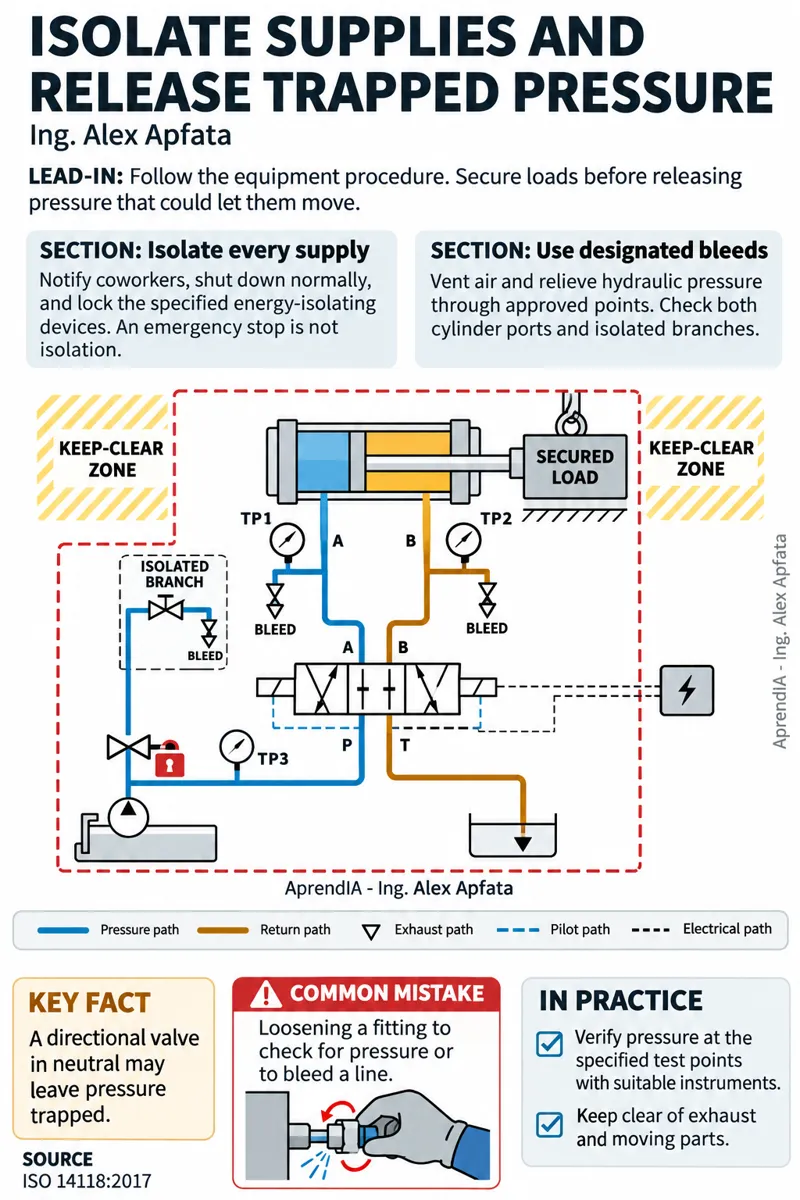
    3. Isolate Supplies and Release Trapped Pressure
    4. Support Loads Before You Work
    5. Recognize Accumulator Hazards and Service Boundaries
    6. Recognize Hose Whip and Fluid Injection Hazards
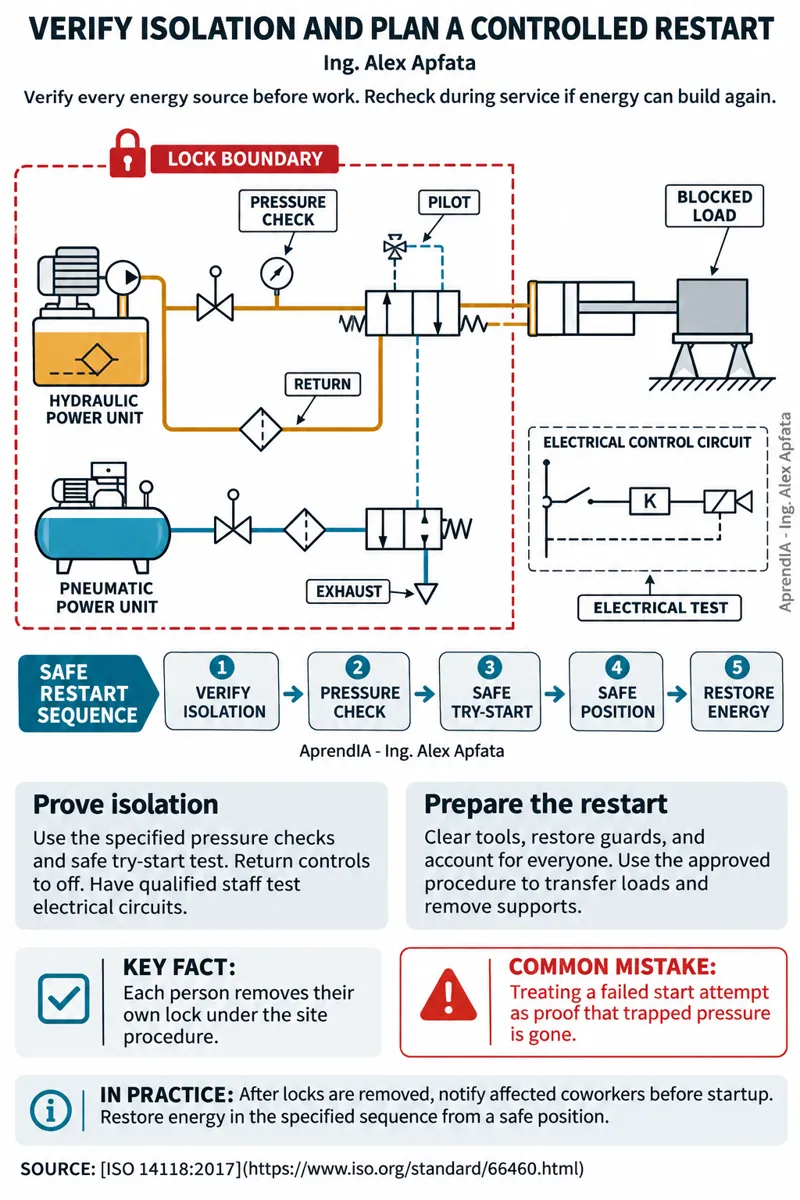
    7. Verify Isolation and Plan a Controlled Restart
  3. Unit 3: Generate and Prepare Compressed Air

    1. Follow Air from the Compressor to the Machine
    2. Understand Compressor Operation and Duty Limits
    3. Identify Receiver Controls, Drains, and Protective Devices
    4. Remove Water with Aftercoolers, Separators, and Dryers
    5. Read Air Filter and Drain Arrangements
    6. Understand Regulators and Pressure Under Load
    7. Read an FRL Assembly and Check Lubrication Requirements
    8. Check Distribution Piping, Hoses, and Restrictions
  4. Unit 4: Read and Control Pneumatic Circuits

    1. Compare Single-Acting and Double-Acting Cylinders
    2. Read Directional Valve Ports, Positions, and Actuators
    3. Trace Spring-Return, Detented, and Piloted Valve States
    4. Control Cylinder Speed with Check Valves and Flow Controls
    5. Follow Exhaust Through Mufflers and Quick Exhaust Valves
    6. Connect a Solenoid Signal to Valve Movement
    7. Trace Switches, Relay Contacts, and PLC Signals
    8. Read a Complete Electro-Pneumatic Cylinder Cycle
  5. Unit 5: Understand Hydraulic Power and Components

    1. Follow Oil Through a Hydraulic Power Unit
    2. Compare Gear, Vane, and Piston Pumps
    3. Identify Reservoir, Breather, and Cooling Functions
    4. Check Fluid Type, Viscosity, and Compatibility
    5. Control Particles, Water, and Air in Hydraulic Fluid
    6. Read Filter Locations, Bypass Paths, and Indicators
    7. Compare Hydraulic Cylinders and Motors
    8. Match Hoses, Fittings, Seals, and Pressure Ratings
  6. Unit 6: Read Hydraulic Controls and Schematics

    1. Trace Directional Valve Flow Paths and Center Conditions
    2. Understand Relief Valves and Pressure Limits
    3. Compare Pressure-Reducing and Relief Valves
    4. Compare Sequence and Unloading Functions
    5. Read Counterbalance and Pilot-Operated Check Circuits
    6. Compare Fixed and Pressure-Compensated Flow Controls
    7. Trace Meter-In, Meter-Out, and Bleed-Off Circuits
    8. Read Hydraulic Symbols, Pilot Lines, and Case Drains
    9. Trace a Hydraulic Cylinder Circuit Through Each Operating State
  7. Unit 7: Troubleshoot and Maintain Fluid Power Systems

    1. Define the Symptom and Plan Authorized Measurements
    2. Separate External Leaks from Internal Bypass
    3. Troubleshoot a Slow or Weak Pneumatic Cylinder
    4. Troubleshoot a Slow or Weak Hydraulic Actuator
    5. Trace Overheating, Noise, and Foaming
    6. Respond to Drift, Unexpected Movement, and Failed Solenoid Commands
    7. Use a Maintenance Checklist and Record What Changed
  8. Fluid Power Terms You Will Hear on the Job

Before you start

What does my purchase include?+

This digital PDF guide, United States edition, for personal use. No printed books, other titles or subscriptions.

Can I read it on my phone?+

Yes. Open the PDF on your phone, tablet or computer with any PDF reader.

How do I get the book and how can I pay?+

Checkout opens Stripe (card) or PayPal and you see the amount before confirming. As soon as the payment is verified you download the PDF and get an email with your private access link. The whole thing takes under 2 minutes.

What if it is not what I need?+

You have 30 days from purchase to ask for a refund by replying to your order email. We refund the full amount to the same payment method, no questions asked.

$27.00USD · digital PDF

YOUR NEXT READ

Make it yours.

Industrial Pneumatics and Hydraulics: The Visual Guide

PDF · One-time payment$27.00 USD

Checking availability…

Have a coupon?

Stripe processes the payment. When you come back you can download your book, and we email you the link.

Book page