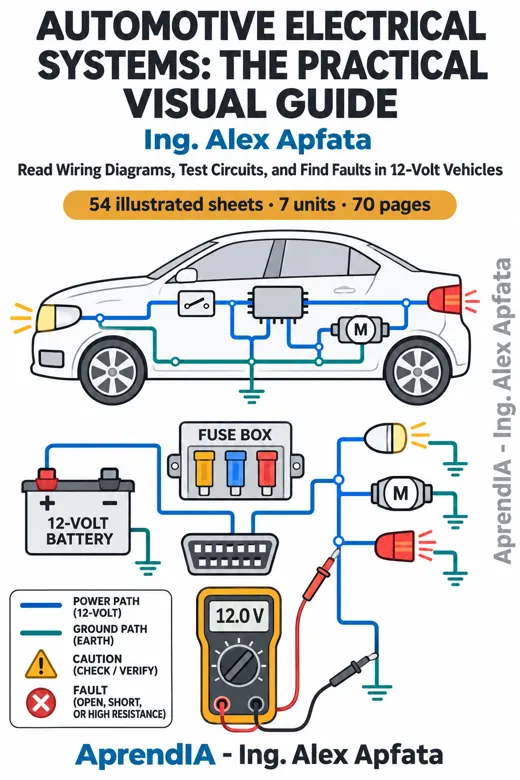
4 real pages from the book · tap one to enlarge
INSIDE THIS GUIDE
What you will learn.
- 01
Choose safe DMM and test-light setups for the circuit you need to check.
- 02
Trace power and ground paths through wiring diagrams, fuses, relays, switches, and connectors.
- 03
Follow illustrated workflows to isolate faults, repair wiring, and verify your results.
TABLE OF CONTENTS
Everything inside, unit by unit.
7 units · 54 topics
Unit 1: Work Safely and Understand the Circuit
- Set Up a Safe Work Area Around Batteries and Moving Parts
- Recognize the Boundary: Airbags and Hybrid/EV High Voltage Are Out of Scope
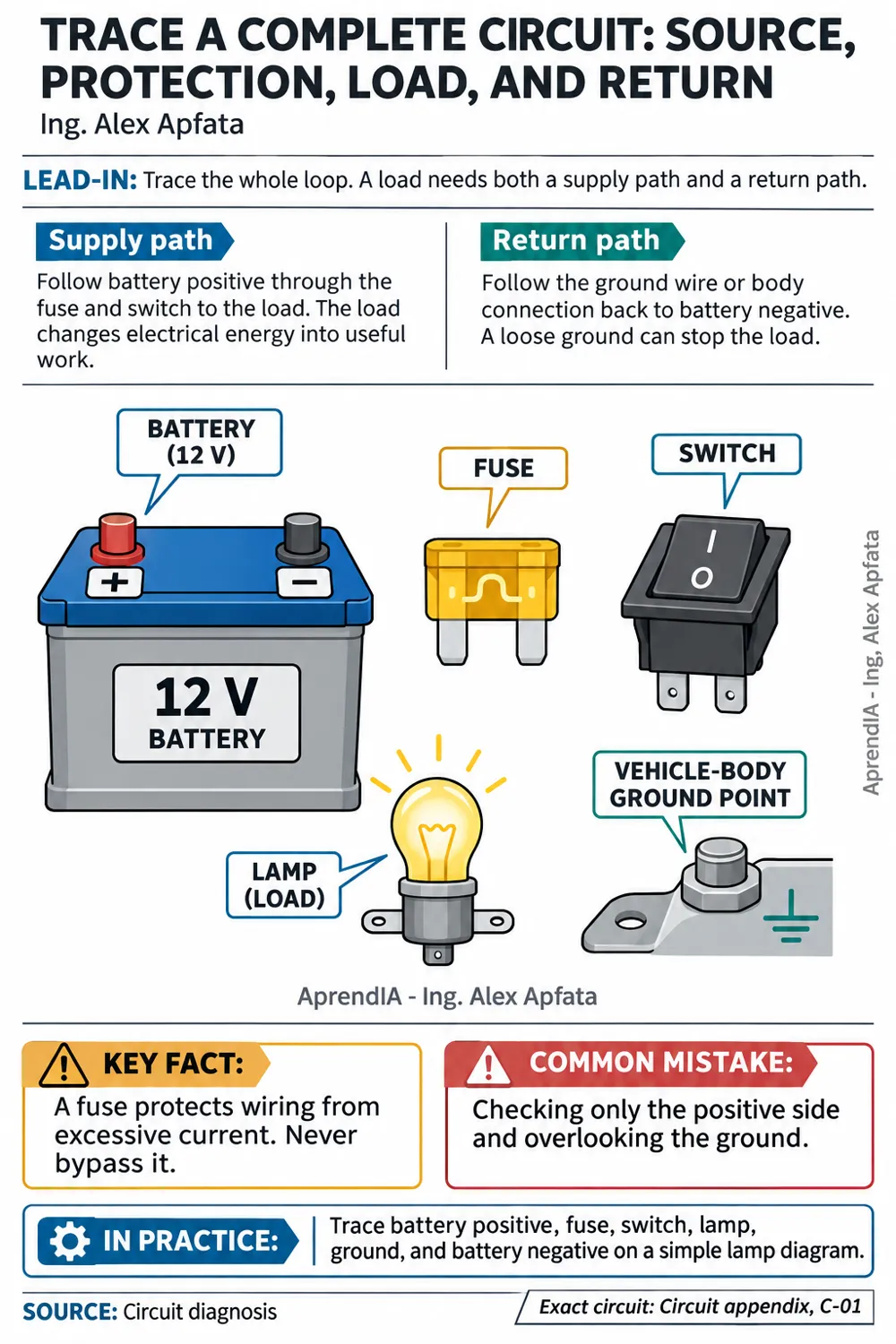
- Trace a Complete Circuit: Source, Protection, Load, and Return
- Tell Voltage, Current, and Resistance Apart
- Use Ohm's Law to Understand Loads and Circuit Changes
- Recognize Series Paths, Parallel Branches, and Common Faults
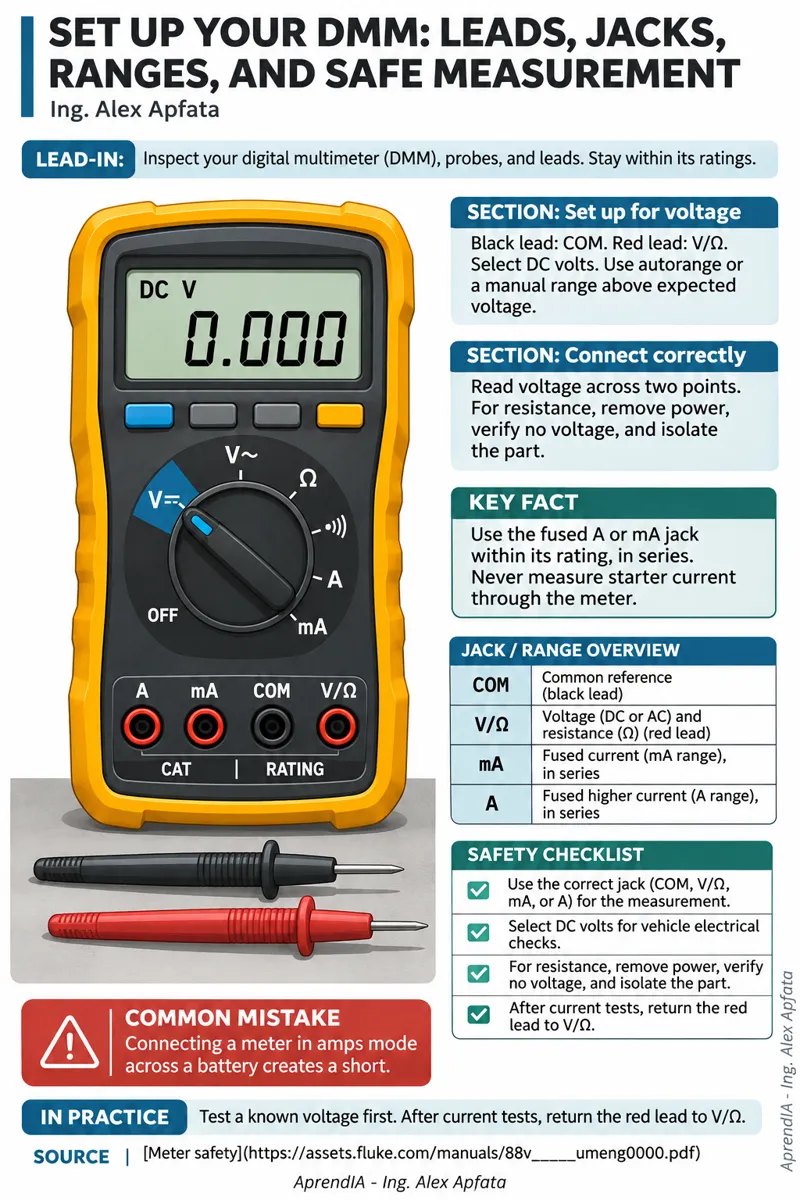
- Set Up Your DMM: Leads, Jacks, Ranges, and Safe Measurement
- Choose a Test Light Without Overloading the Circuit
Unit 2: Test the Battery, Starting System, and Charging System
- Identify the Battery Type and Inspect Its Condition
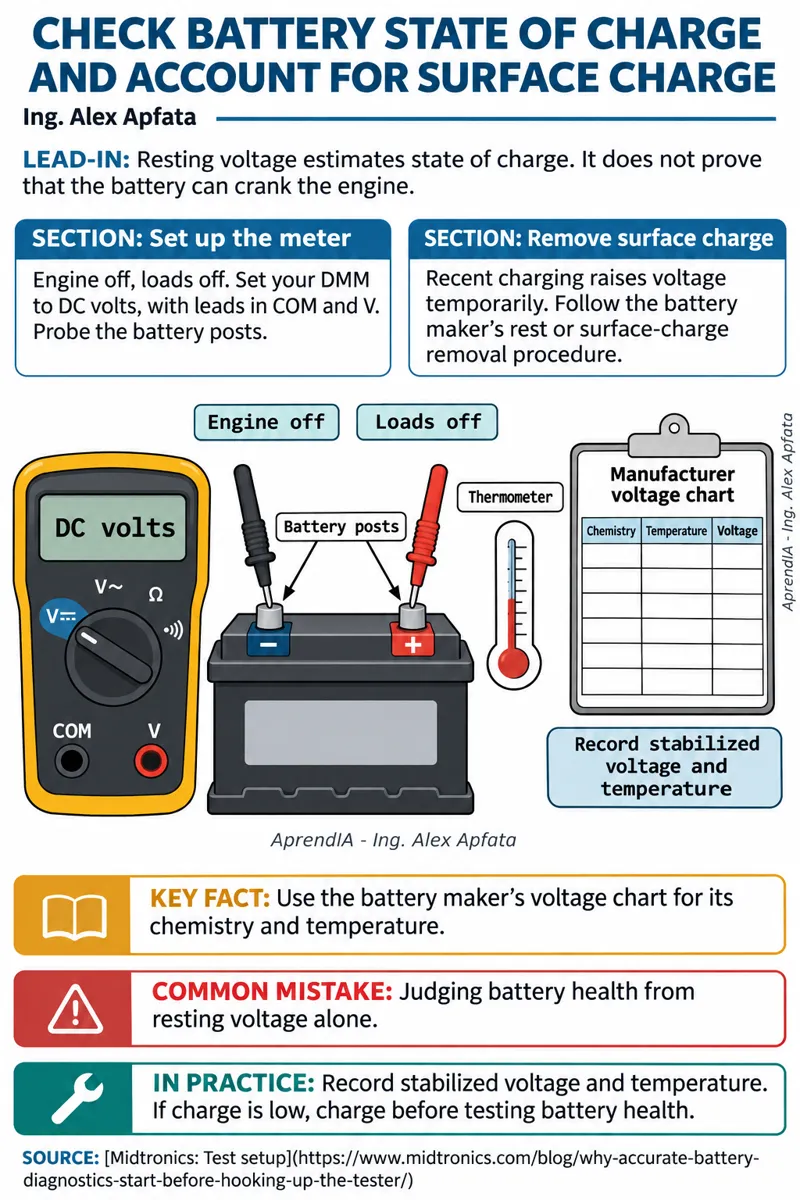
- Check Battery State of Charge and Account for Surface Charge
- Assess Battery Health With the Correct Test and Rating
- Charge a Battery With the Correct Charger and Vehicle Procedure
- Plan Battery Disconnection, Reconnection, and Required Relearns
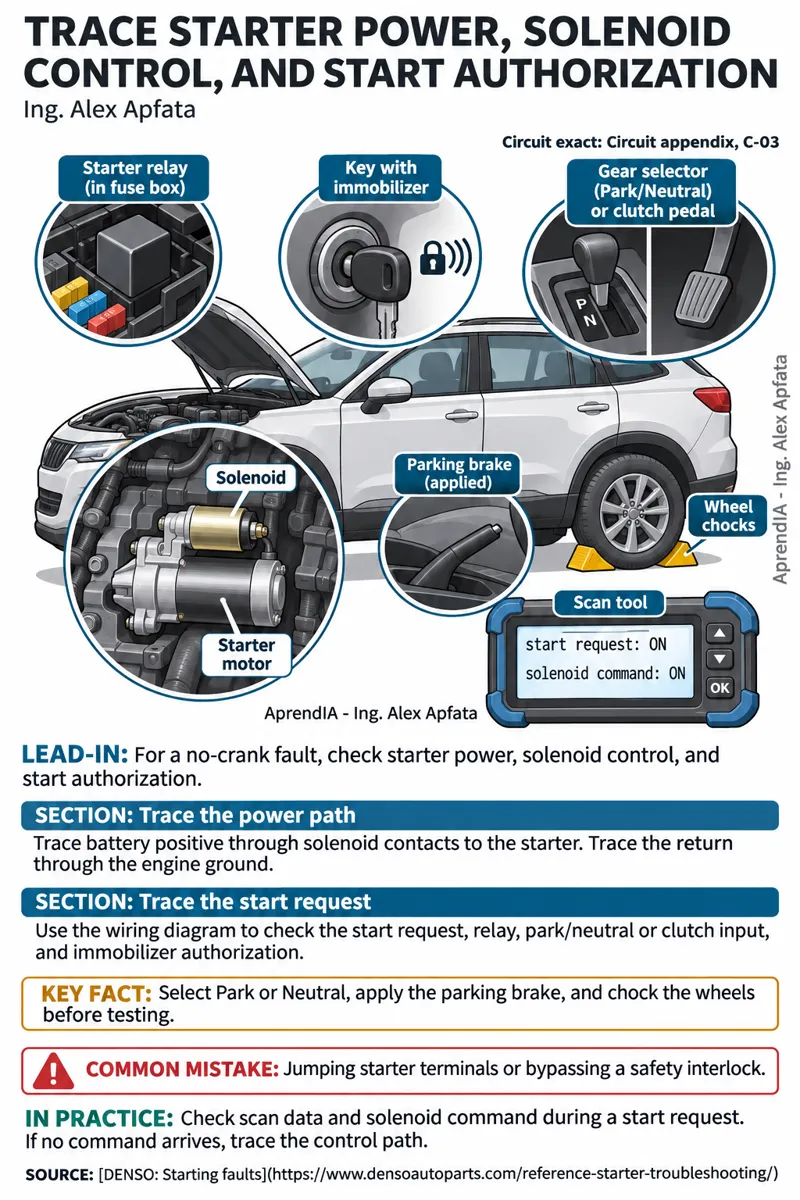
- Trace Starter Power, Solenoid Control, and Start Authorization
- Check Cranking Voltage and Starter Cable Voltage Drop
- Check Alternator Output and Computer-Controlled Charging
Unit 3: Read Diagrams and Test Power and Ground
- Find the Correct Wiring Diagram and Service Procedure
- Read Symbols, Wire Labels, Splices, and Cross-References
- Match Connector Views and Terminal Numbers to the Vehicle
- Trace Power Distribution Through Each Key and Operating State
- Locate Grounds, Ground Straps, and Shared Return Paths
- Measure Voltage Drop on the Power Side Under Load
- Measure Ground-Side Voltage Drop and Narrow the Fault
- Know When Continuity and Resistance Tests Can Mislead You
Unit 4: Check Circuit Protection, Relays, and Lighting
- Identify Fuses, Circuit Breakers, and Fusible Links
- Test a Fuse in the Circuit and Check Its Connections
- Separate an Overload From a Short to Ground
- Read Relay Coil and Contact Paths From the Diagram
- Test Relay Control, Contact Voltage Drop, and Load Operation
- Trace Headlight Power, Grounds, and Control Commands
- Trace Brake Lights, Turn Signals, and Shared Lamp Grounds
- Recognize LED Drivers, PWM Control, and Meter Limitations
Unit 5: Understand Switches, Sensors, Modules, and Networks
- Test Switch Inputs Without Overloading Module Circuits
- Check Sensor Reference Voltage, Ground, and Signal
- Recognize Analog, Resistance-Based, and Digital Sensor Signals
- Check Module Power and Grounds Before Suspecting the Module
- Use Generic OBD-II and Recognize Its Limits on U.S. Vehicles
- Understand CAN Bus Messages, Twisted Pairs, and Termination
- Approach Communication Faults With the Correct Network Diagram
Unit 6: Find Battery Drain and Repair Wiring
- Prepare for a Parasitic Draw Test and Let Modules Sleep
- Measure Key-Off Current With a Suitable Low-Current Clamp
- Understand Series Ammeter Limits and Prevent Meter Damage
- Isolate a Draw With Fuse Voltage Drop and Circuit Information
- Inspect Connectors for Corrosion, Loose Terminals, and Heat Damage
- Choose the Correct Wire, Terminal, and Approved Splice Method
- Crimp, Seal, Route, and Verify a Wiring Repair
Unit 7: Follow a Repeatable Electrical Diagnostic Method
- Step 1: Verify the Concern and Record the Operating Conditions
- Step 2: Gather Service Information and Map the Circuit
- Step 3: Predict the Result and Choose a Safe Test
- Step 4: Isolate the Fault, Repair It, and Verify the Fix
- Walkthrough: Find the Cause of a No-Crank Complaint
- Walkthrough: Diagnose a Charging Warning With Service Data
- Walkthrough: Trace a Dim Lamp to a Poor Ground
- Walkthrough: Find an Intermittent Open With Controlled Harness Movement
Glossary: Electrical Terms You Will Hear in the Shop
Appendix: 24 wiring diagrams, drawn to spec
FROM READERS WHO ALREADY HAVE IT
Customer reviews.
Before you start
What does my purchase include?+
This digital PDF guide, United States edition, for personal use. No printed books, other titles or subscriptions.
Can I read it on my phone?+
Yes. Open the PDF on your phone, tablet or computer with any PDF reader.
How do I get the book and how can I pay?+
Checkout opens Stripe (card) or PayPal and you see the amount before confirming. As soon as the payment is verified you download the PDF and get an email with your private access link. The whole thing takes under 2 minutes.
What if it is not what I need?+
You have 30 days from purchase to ask for a refund by replying to your order email. We refund the full amount to the same payment method, no questions asked.